From 150+ people to one system
I graduated in Computer Engineering in 2007. Some years before that, at 18, I moved eight to ten hours from home, knowing nobody. It was messy. It was also the first time I could disappear into coding, networks, microprocessors, and security. I am still grateful I made it.
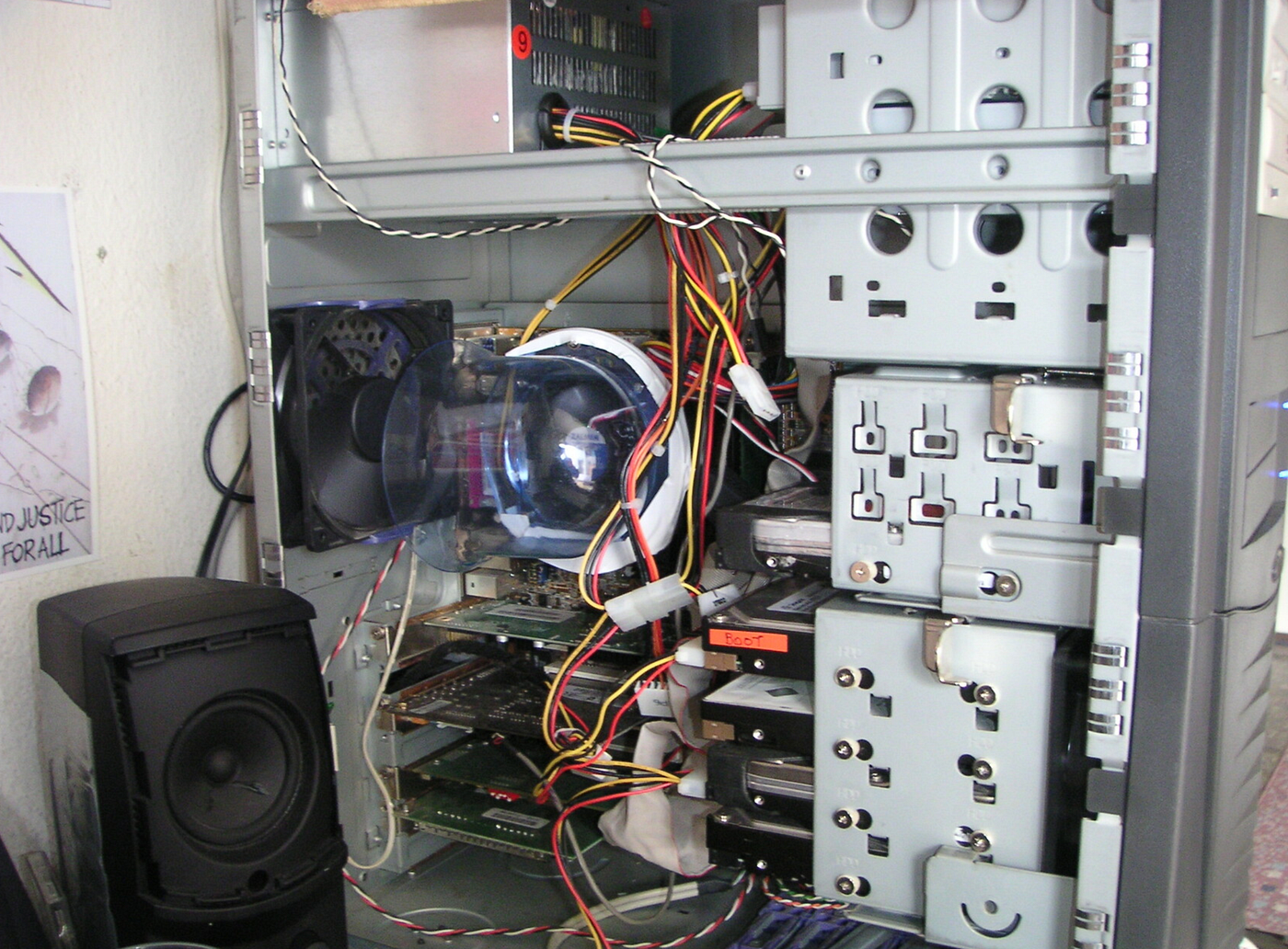
This is when it all started, my personal university-era computer. Guess the record on the wall print.
Then life happened: mandatory military service, I met my wife, I joined a band as a guitarist, and in 2009, I started a 9-to-5 in network engineering. I didn’t have any money to spare or travel abroad to “know myself better”, so I needed to start working right away. It took a while for me to get my first one, but eventually, it happened.
Work was chaotic: the person before me left the place a mess. The pressure from scattered information and responsibilities was obvious. I was afraid my days would turn into a grind: dive into a pile of unstructured information and never surface.
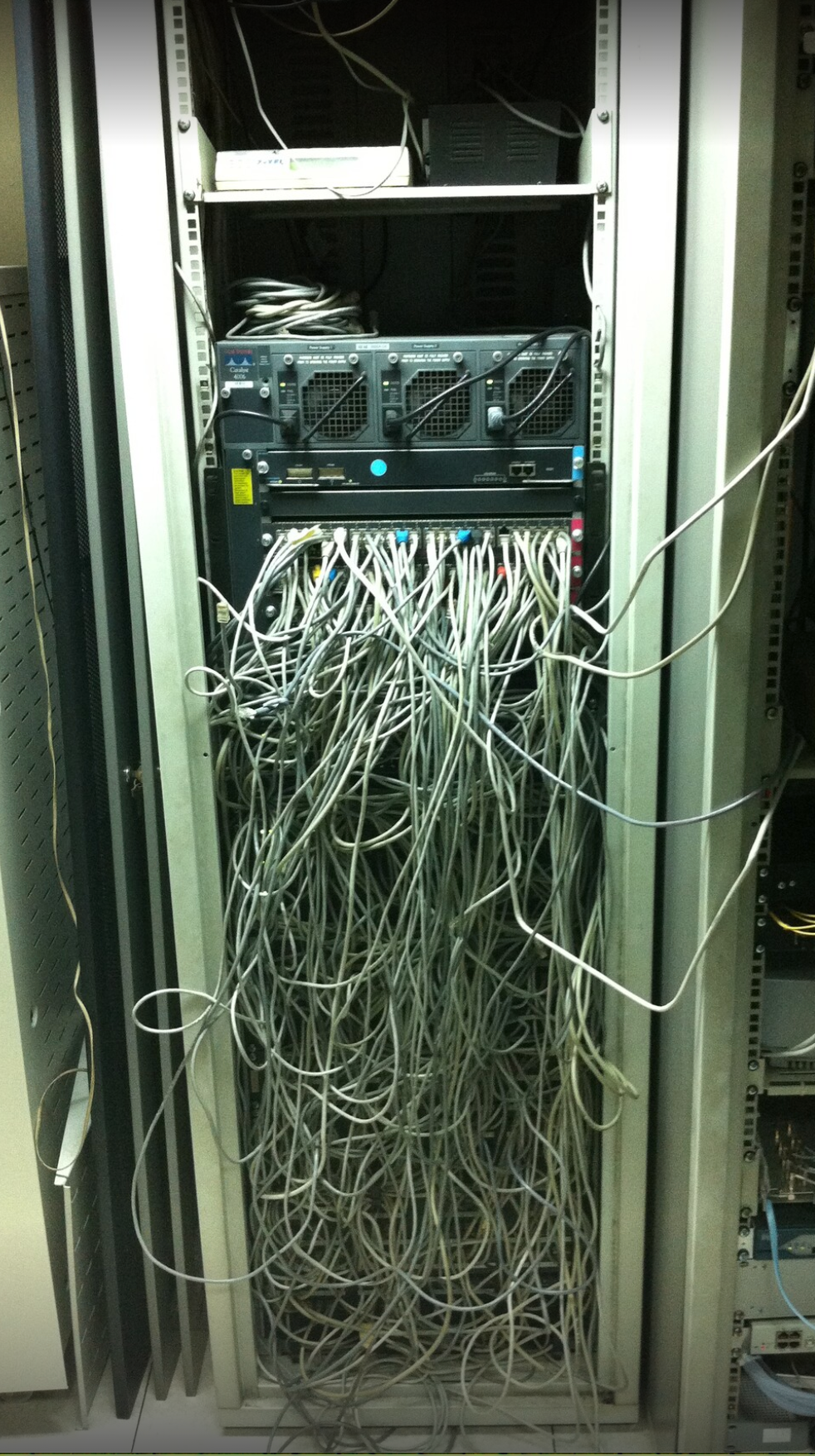
This was what the computer room (= my brain) looked like back then
I had an office in the IM (Information management) department, and I was happy with that. An office and a computer room just for me? I had to make it work. I still remember entering the computer room and smelling the cigarette smoke of my colleagues who used it as a smoking room. My clothes smelled the same when I was back home, and I had to put them out on the balcony to get the smell out.
Truth is that when others only see and breed chaos, I see patterns. I can’t help myself with that as it is a process in my brain running in the background on a loop. I saw missing asset management, licenses scattered on .txt files, people complaining about their files, security audits, disaster recovery processes, and a bunch of endless information falling on a constant basis to the IM department.
On the other hand, I was facing a different side of life going on when I was leaving the office. I had errands, people to meet, purchases to make, aspirations, and things I wanted to learn, code, create. Places to visit. Birthdays to remember.
I started searching about organization in general and found out my little diamond: Getting Things Done by David Allen. I read it in two days and built a flow. Two or three inboxes (Outlook and the paper that landed on the desk) then process. Spreadsheets for tasks and projects. A folder tree on the server for procedures and paperwork. I sent the link to the network path to 150+ people I supported (150 working on the local office branches plus 25+ partners in different places in Greece plus some management in Europe and US). They were skeptical at first. After a few weeks, the “where is that file?” messages slowed down.
Meanwhile, I was able to automate as much as I could with my coding skills. Back then, I used Python and Powershell to create scripts and small web pages to generate, copy, and verify files.
I continued my daily search for an optimal system to control all this mess. That search also led me to Gina Trapani and todo.txt, then Taskwarrior. It was the era of Remember the Milk and early Asana. I stayed with Wunderlist until Microsoft bought it and shut it down.
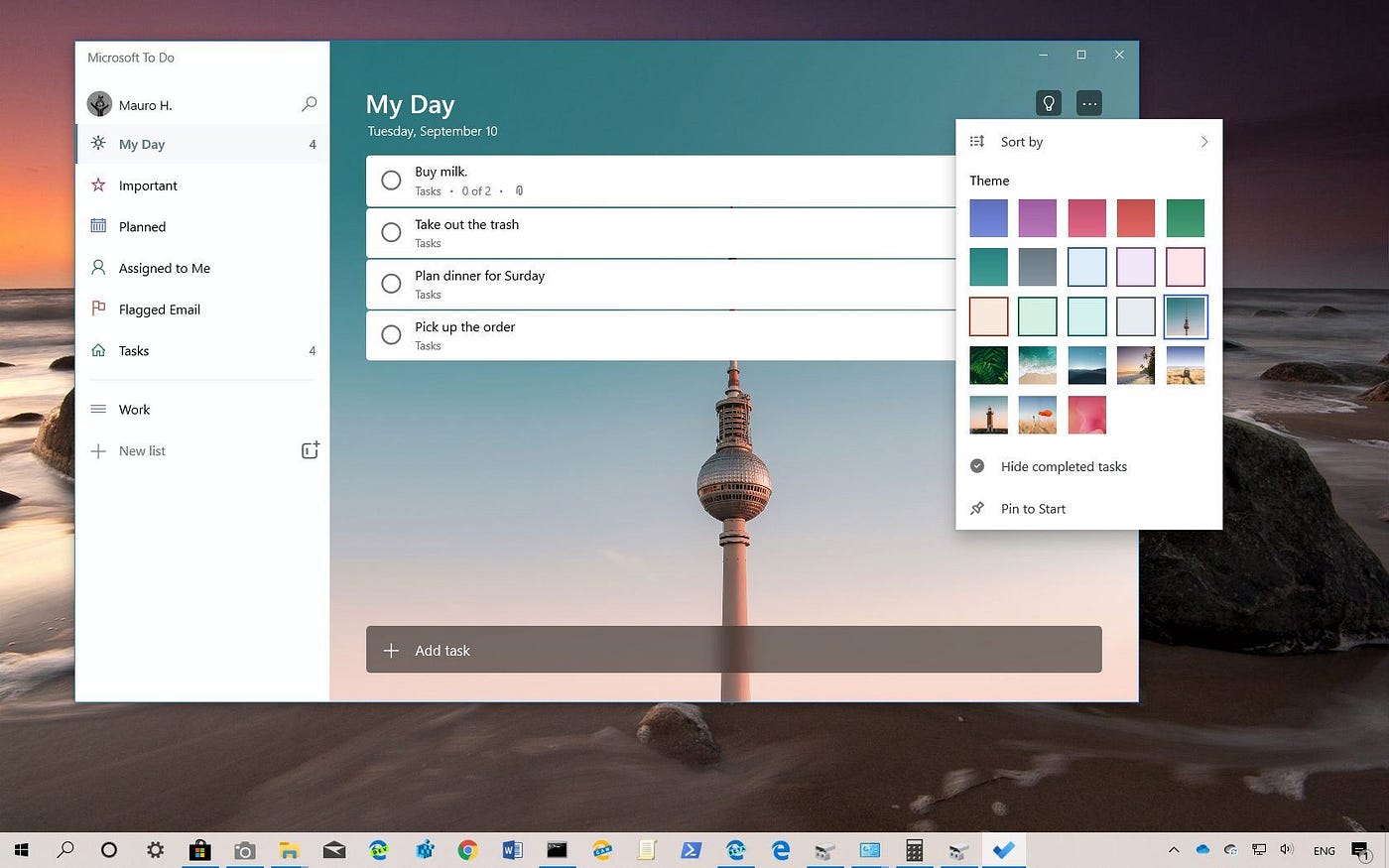
This is what Wunderlist looked like once upon a time
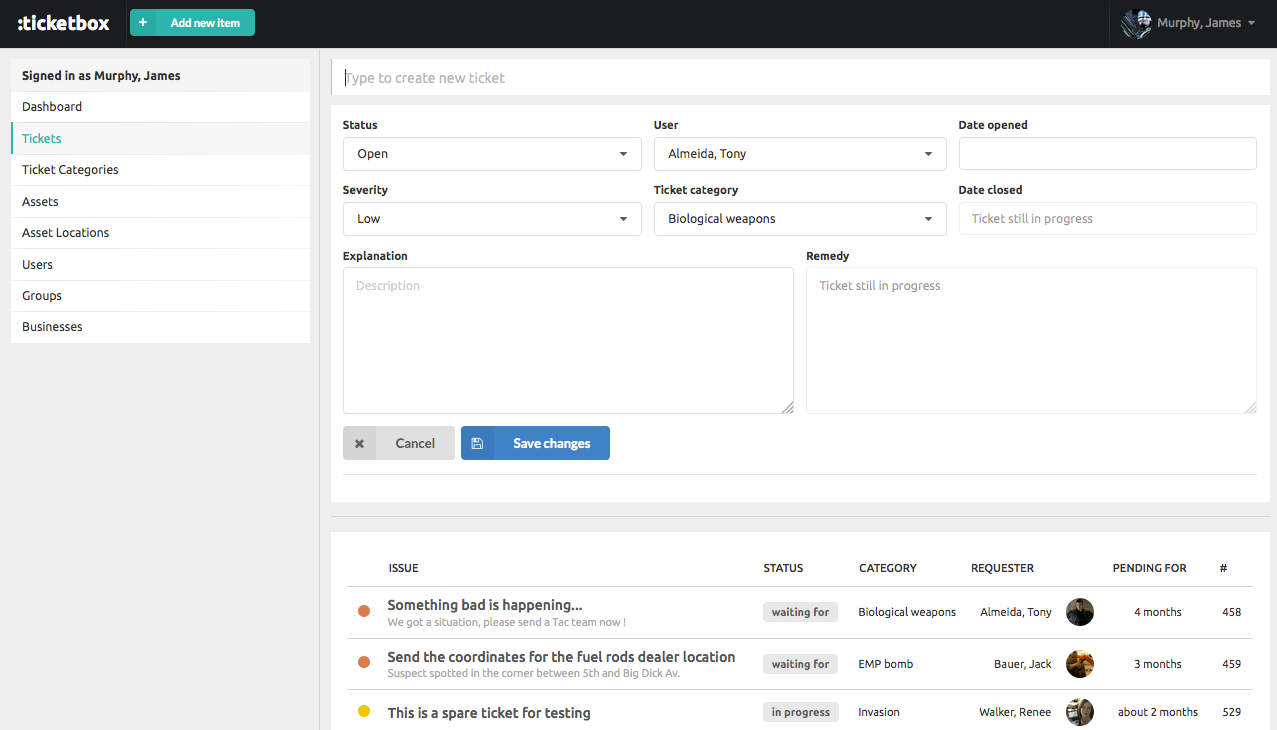
After a couple of years of searching around and learning how to code in new languages, I fell in love with Ruby and Ruby on Rails. Ticketbox was the first complete product I shipped for work: a ticketing system for that same chaos (github.com/chrisvel/ticketbox). It also got me out of network engineering and into software by showcasing my coding knowledge (no AI slop back then).
I never stopped looking for the system. I read the usual books, Eat That Frog!, The 7 Habits, and tried Pomodoro, time blocking, Eisenhower, Kanban, Agile. I even bought a JIRA license for personal use. Crazy, isn’t it? I know, I have almost always been an unfulfilled productivity maniac.
I was also trying every little piece of software coming out, following every release log and update happening: TickTick, Nirvana, Todoist, Microsoft Todo, the new Asana transformation, Any.do, Omnifocus, Toodledo, 2Do as well as open source and others less famous. I settled for a long time with Asana, then left for privacy reasons and because they took a more B2B approach. Wunderlist was dead. Then I went for Omnifocus, which still is a brilliant piece of software, unlike anything else out there. Finally, Things for Mac. I think that Things was the only one I was working with for over a year; everything else was falling short. But after a while using it, I wanted to move to Linux, so I realized I was locked in. Then I started (again) creating a knowledge system for me.
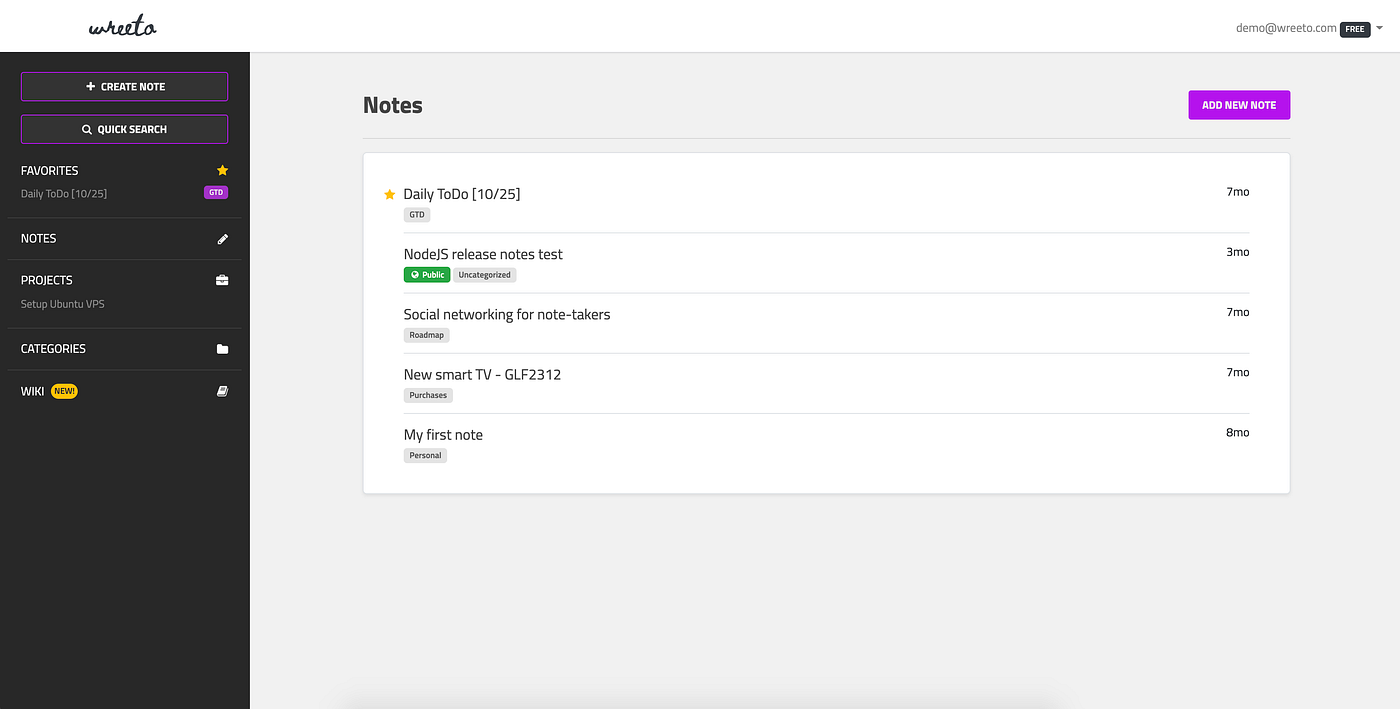
That is when I built wreeto (github.com/chrisvel/wreeto_official), in the season of digital gardens and second brains. It helped. I released it as a SaaS, and it reached about a thousand users in a month. My contract would not let me form a company around it, so I shut the hosted version down and moved on. A failed opportunity as it got over 1000 users in a couple of months, some using it on a daily basis.
Around 2023, I ran into what I started calling information obesity. Everything was digital and arriving fast. Obsidian for notes, Taskwarrior for tasks, a rotating cast of habit trackers, two calendars. The second kid was on the way. Errands and paperwork jumped by an order of magnitude. I could not keep five inboxes in sync. That is when I started tududi: one place, as simple as I could make it.
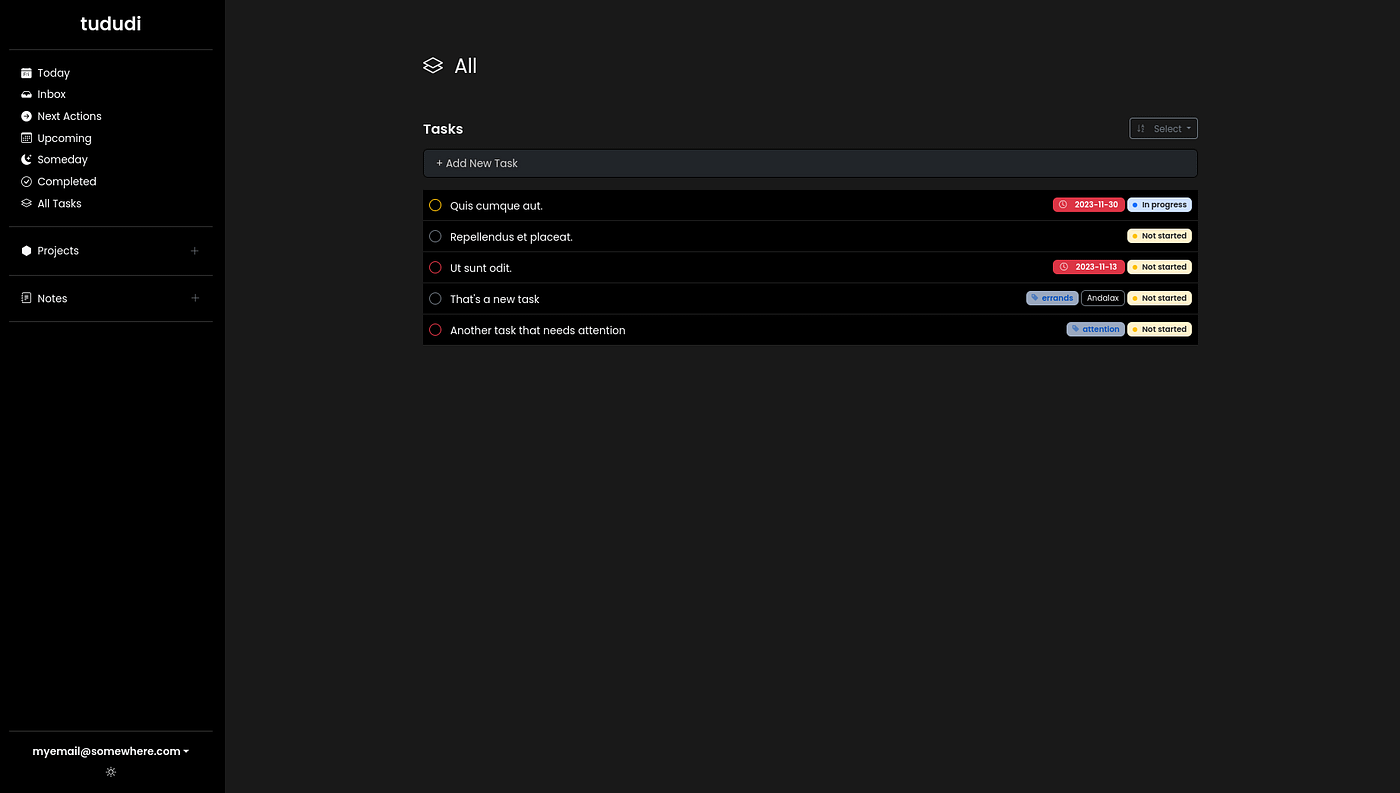
First releases of tududi, this one is 2y ago
At first, it was GTD on my terms: tasks, projects, areas, notes. Every feature had to be designed and built at night, so nothing went in unless I would use it the next morning. When it started working for me, I added what life actually required: habits, goals, attachments, people. I searched for the name and found strangers already talking about it. I built it because I was tired of synchronizing my life across five products.
Then one day, while I was in an adventure park with my kid, I accidentally found out about DB Tech’s review https://www.youtube.com/watch?v=-WXTU0BSXqM. That was like a brick hitting me straight to the head: people found out my work and were actually using it to make their lives better. It actually made their lives better, already. I had no intention to do this, my main goal was to structure the expanding chaos in my life. But in a field that is over saturated with great tools, people were choosing tududi.
Two years later, tududi has almost 3.5k stars on github, 251 forks, 446 branches and 1220 commits. It has almost 220 members on discord and many in reddit as well. Most people are active, opening bugs and feature requests. I had made some really good discussions with nice people in there.
The computer room doesn’t smell like cigarettes anymore. But it’s still full of chaos, still running that pattern-matching loop in the background. The difference is I finally built somewhere for it to live. It has a home. Not because I set out to help anyone else with theirs. Just because I got tired of losing my own signal in the noise.
Originally posted on Medium.